
Bsc Thesis Project KB Nationale Bibliotheek
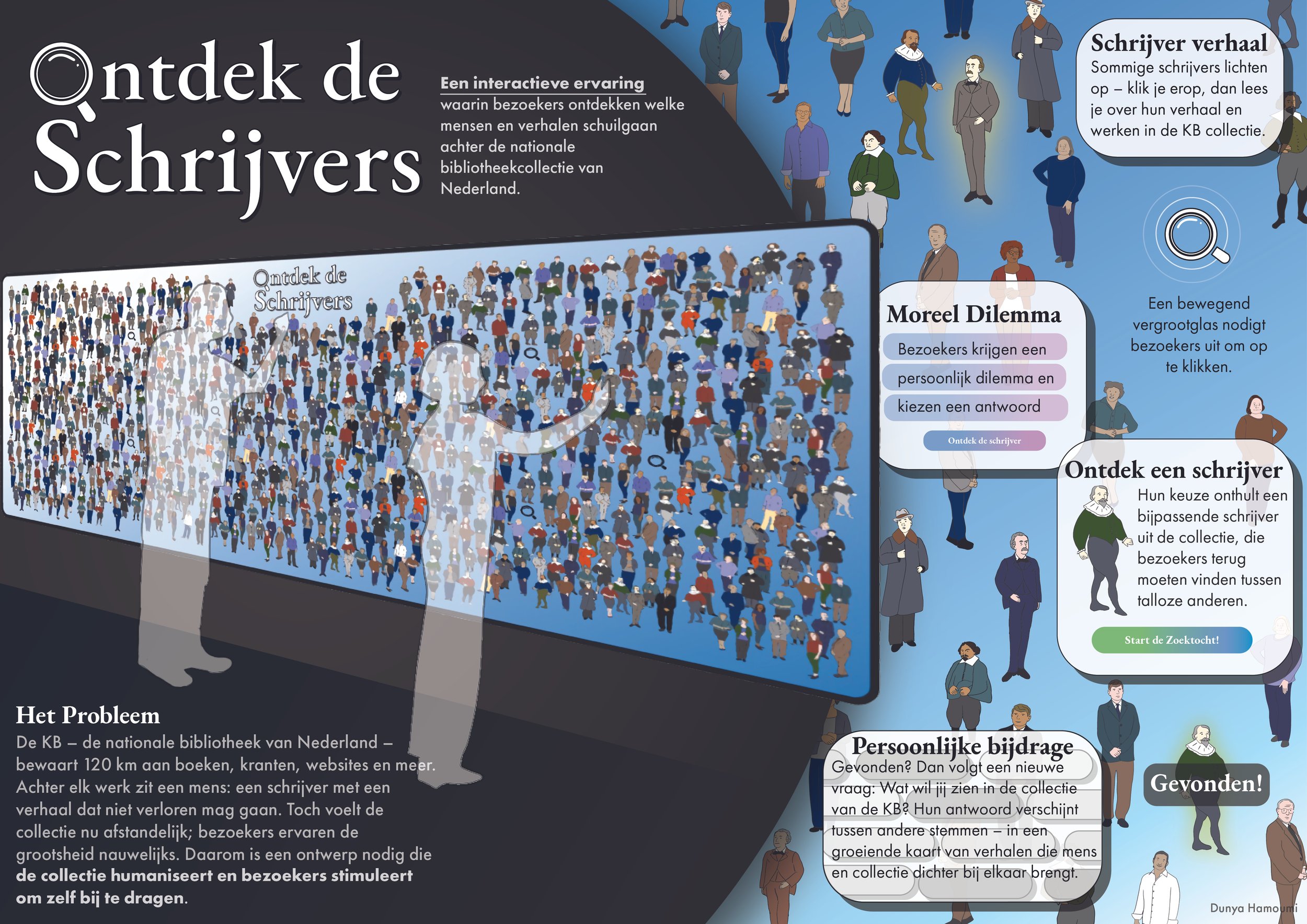
For my graduation thesis, I collaborated with the Royal Library of the Netherlands (KB) to design a digital interface that embodies the human presence behind its vast book collection. This individual design project translates the scale and diversity of the library’s holdings into an interactive experience, allowing visitors to engage with and appreciate the collection in a more personal and tangible way. I graduated cum laude for my Bsc Industrial Design Engineering, receiving a 9.0 / 10 grade for this thesis.
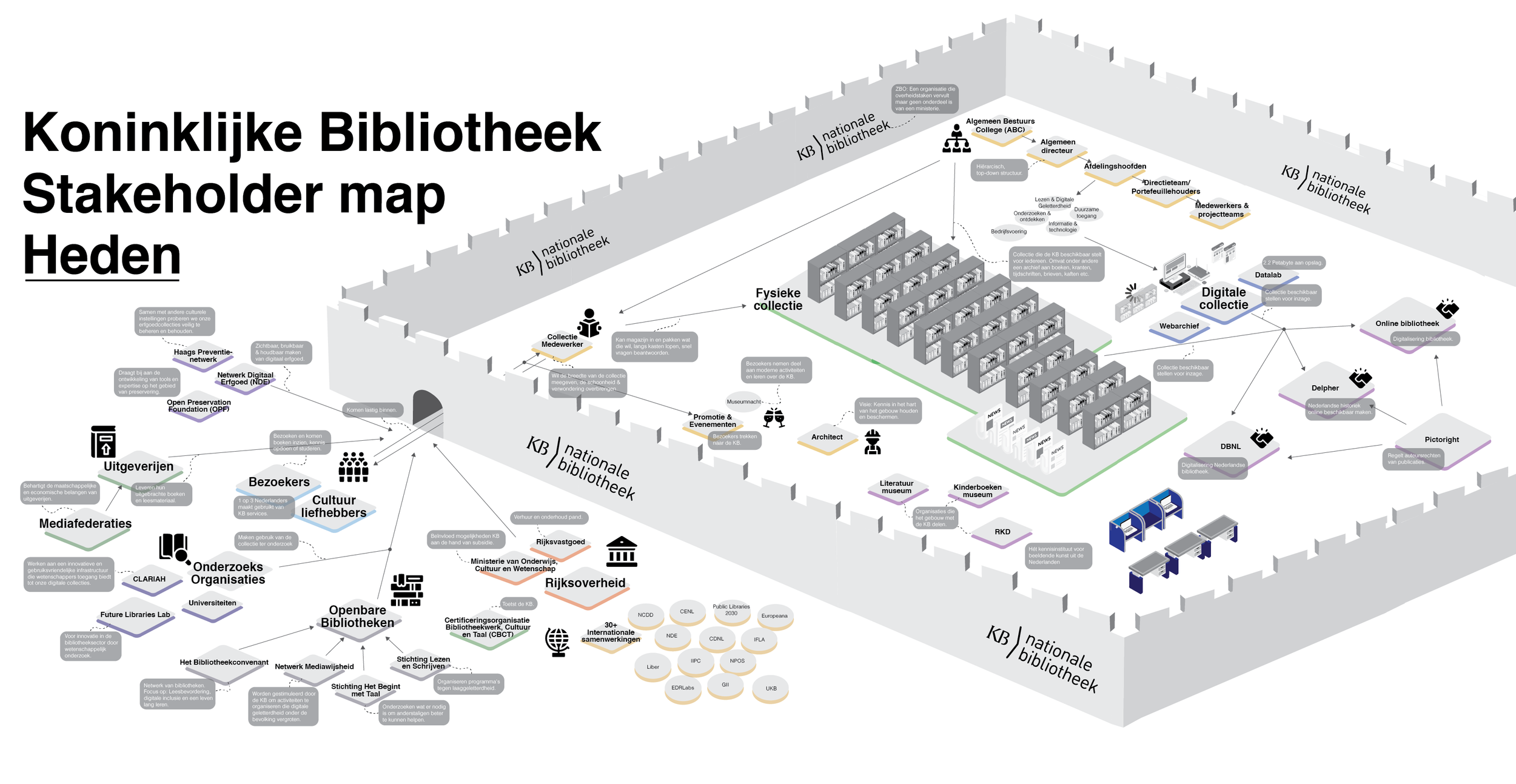
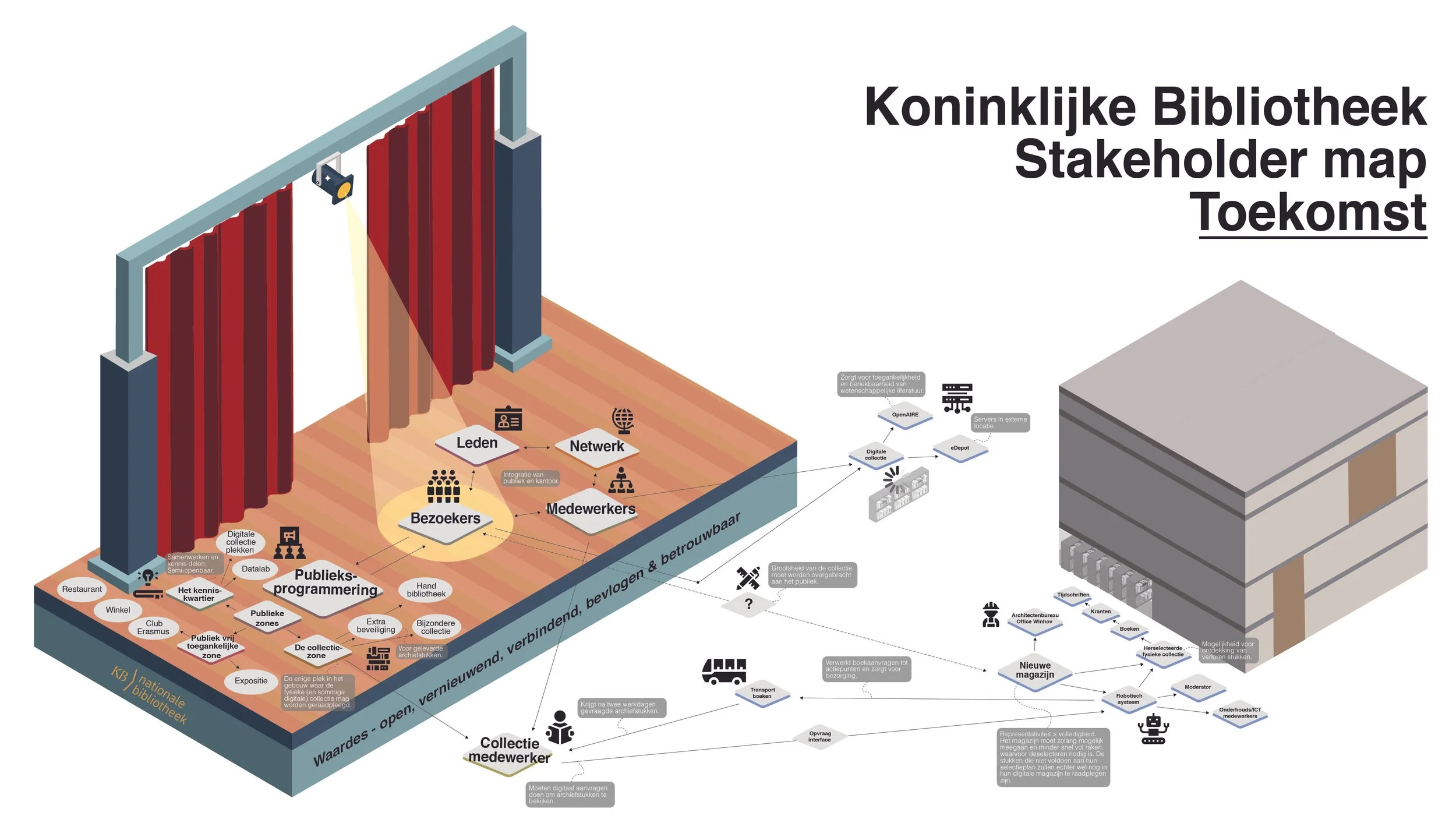
In the stakeholder map of the future situation, the KB shifts from a fortress safeguarding knowledge at its center to a more open and publicly accessible institution, although its collection will be physically stored at a distance.
As an organization, the KB preserves all Dutch publications, both physical and digital, and currently manages a collection spanning 120 kilometers of material. Its mission is to connect people with words.
This collection is currently stored beneath the KB building in The Hague, but will be relocated to a fully robotic storage facility in Delft. At the same time, the KB itself will move to a temporary new building. We were asked to design an installation for a physical, publicly accessible space, where visitors can connect with the collection, experience its magnitude, and feel encouraged to further explore it themselves.
To arrive at a solution, the context of the KB was examined from three perspectives: Human, Technology, and Organization. This phase of the project was conducted in collaboration with a group of 18 students.
I was responsible for visualizing these stakeholder contexts and translating the strategic shift into communicative diagrams. In the stakeholder map of the KB’s current situation, the Koninklijke Bibliotheek is represented as a closed fortress that preserves knowledge at its core, with visitors having limited access or connection to it.
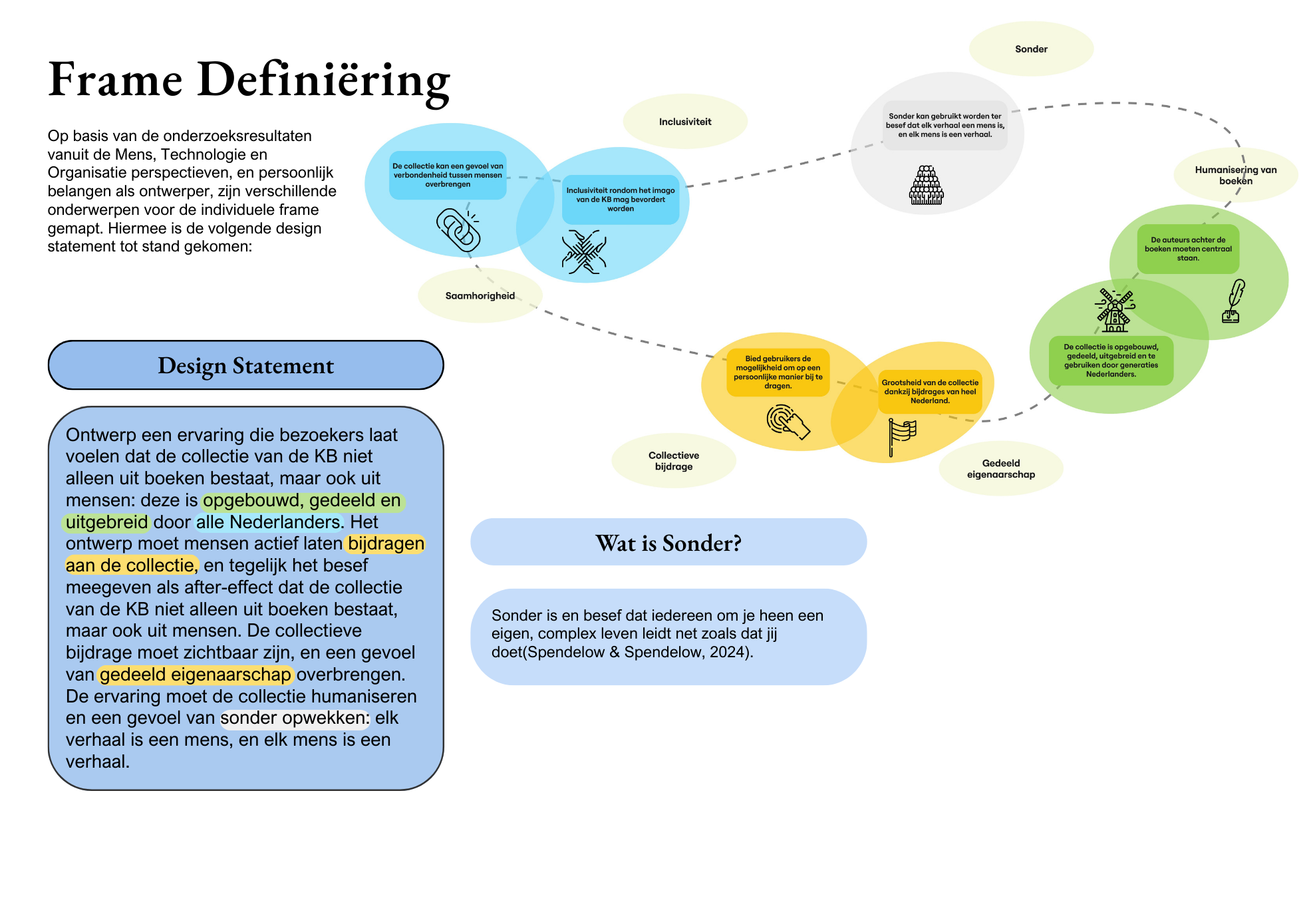
Drawing on research and my interests as a designer, I framed a design to make the Koninklijke Bibliotheek collection feel human. The experience highlights that the library is built and shared by generations of Dutch citizens, encourages visitors to contribute, and makes individual contributions visible. Ultimately, it aims to humanize the collection and evoke sonder, the awareness that every story represents a person, and every person a story.
During a brainstorming session, mind maps were created. The results of these mind maps were then translated into visual mind maps, allowing for a quick overview and understanding of various topics at a glance. These visuals were subsequently incorporated as elements within more complete concepts.
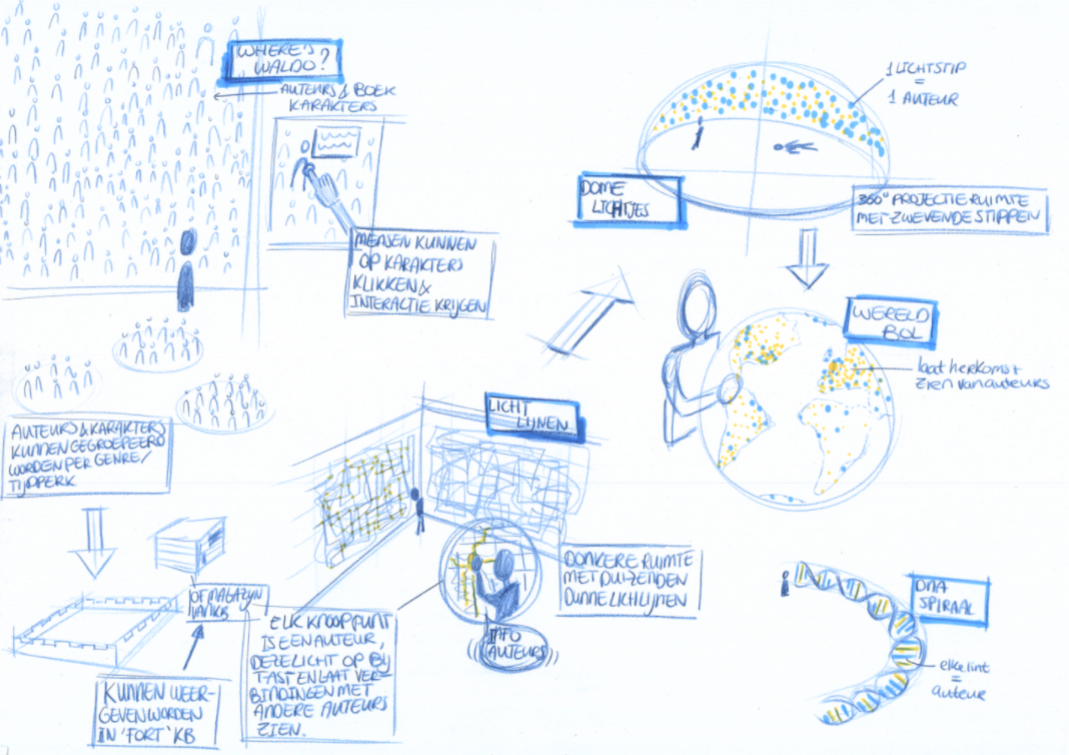
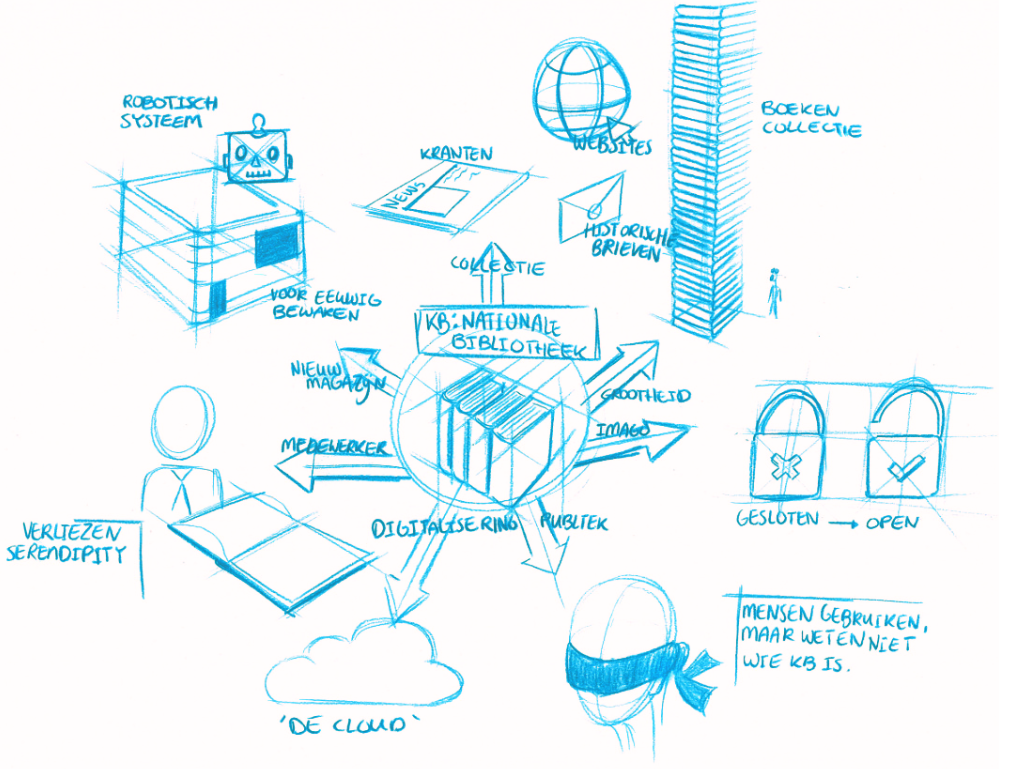
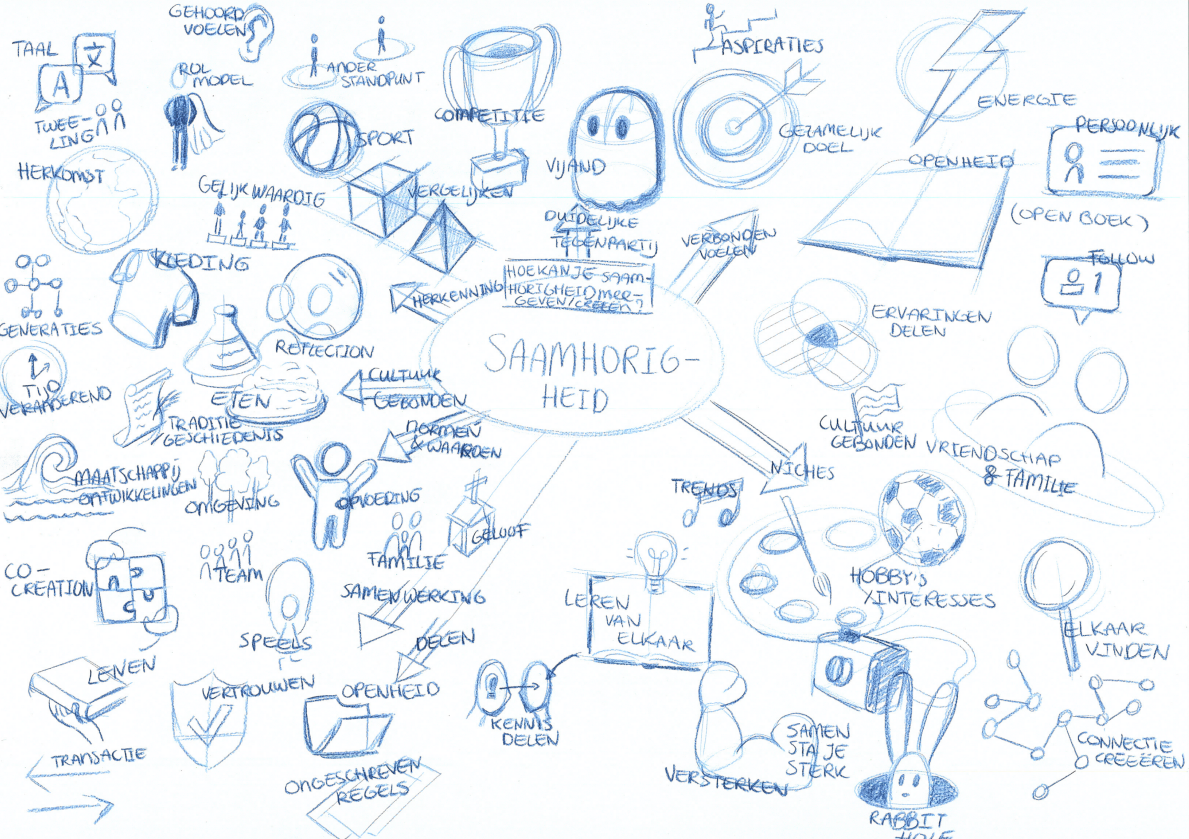
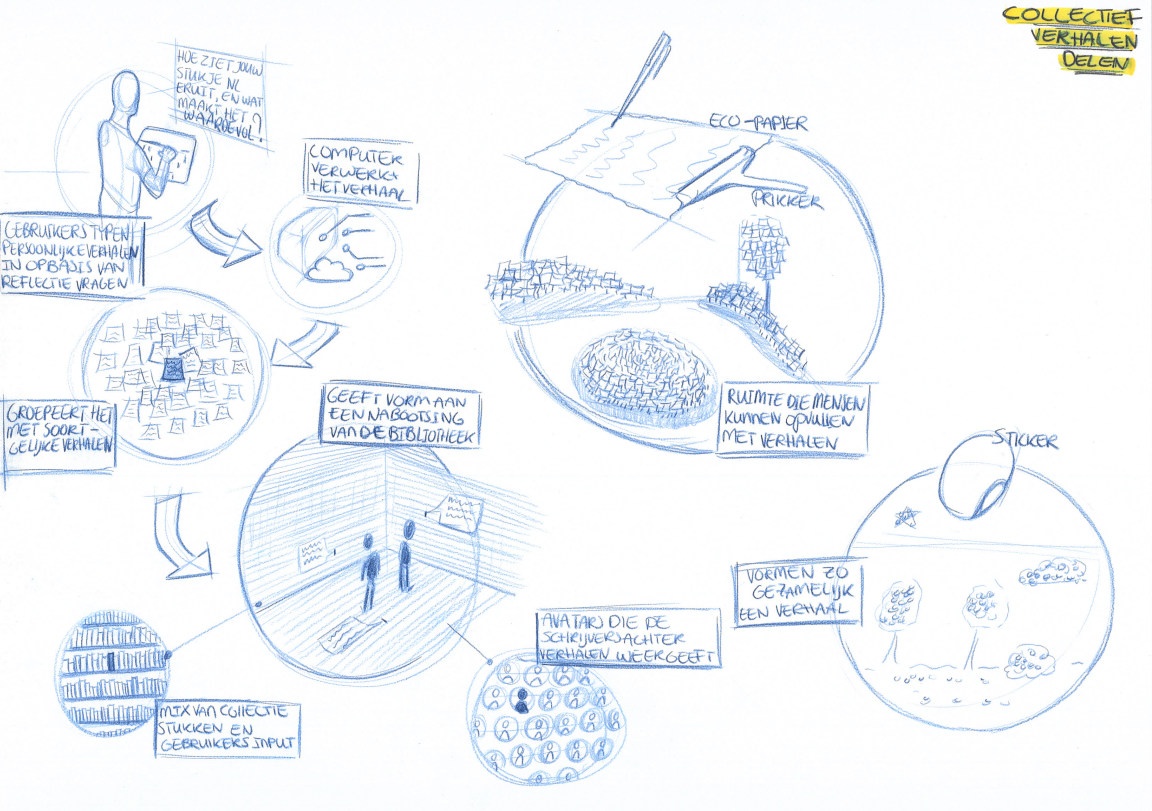
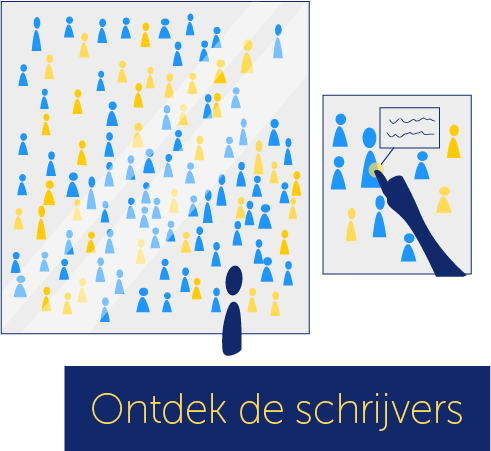
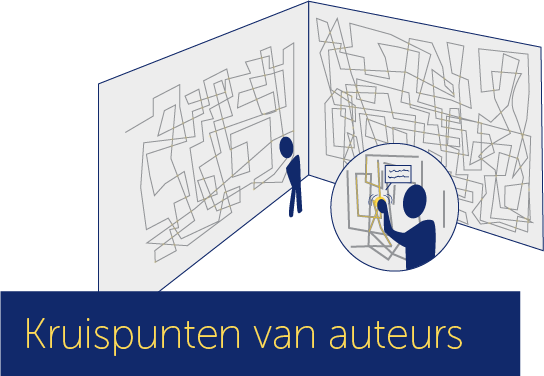
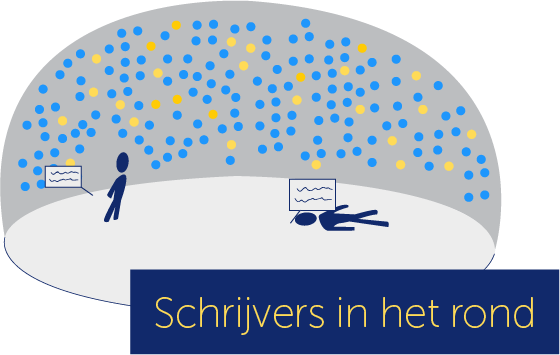
After applying design methods, evaluations, and tests, three concepts were developed and presented to the client during a mid-term meeting. The concept “Ontdek de schrijvers” (Translation: Discover the Writers) performed best, being highly interactive, engaging visitors, encouraging them to explore the collection, and featuring a gamified element with potential for further design development. It was therefore selected for further iteration.
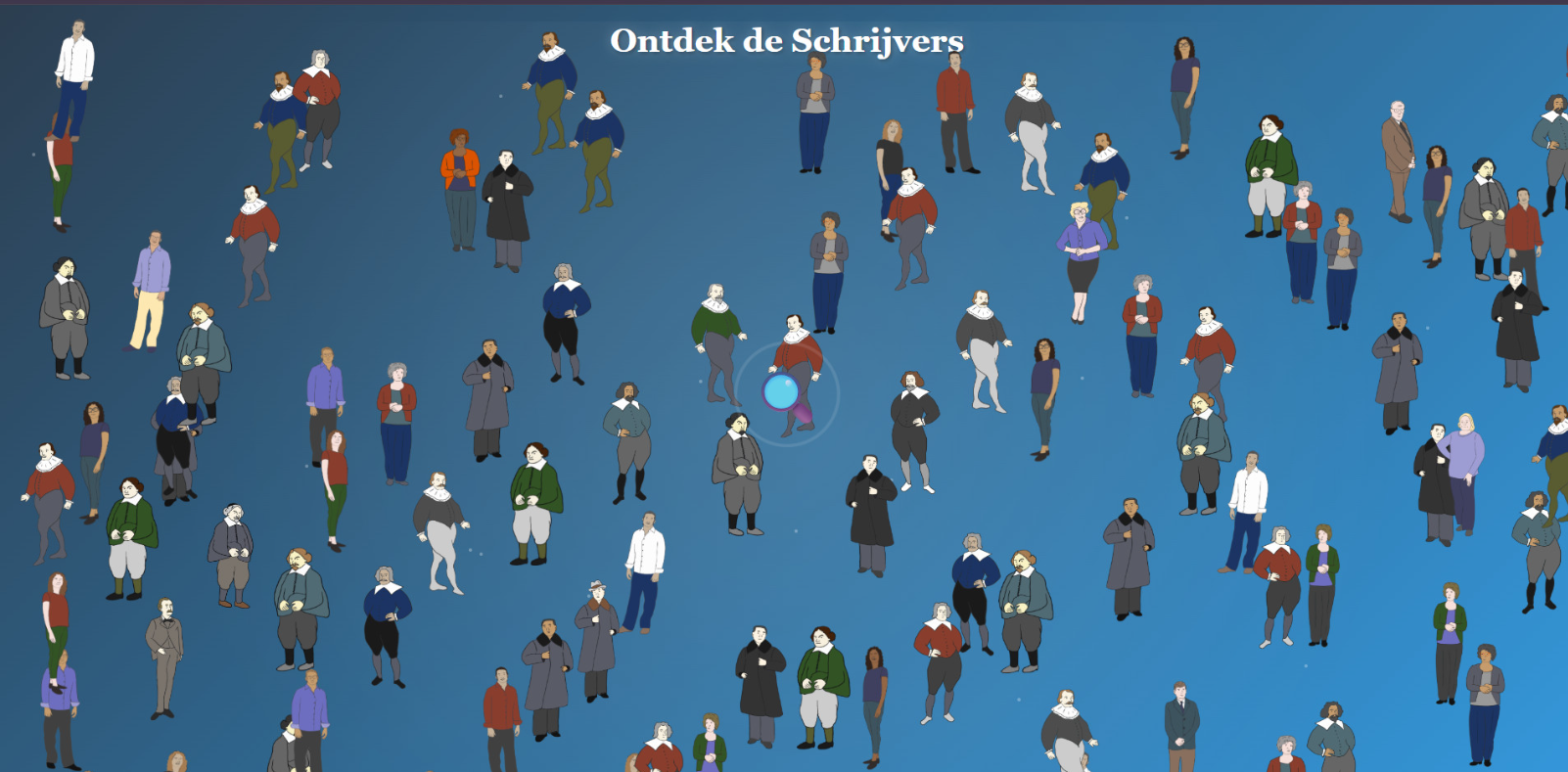
A gamified website that enables interaction with the design, made with Replit.
Self-Animated Interface Study
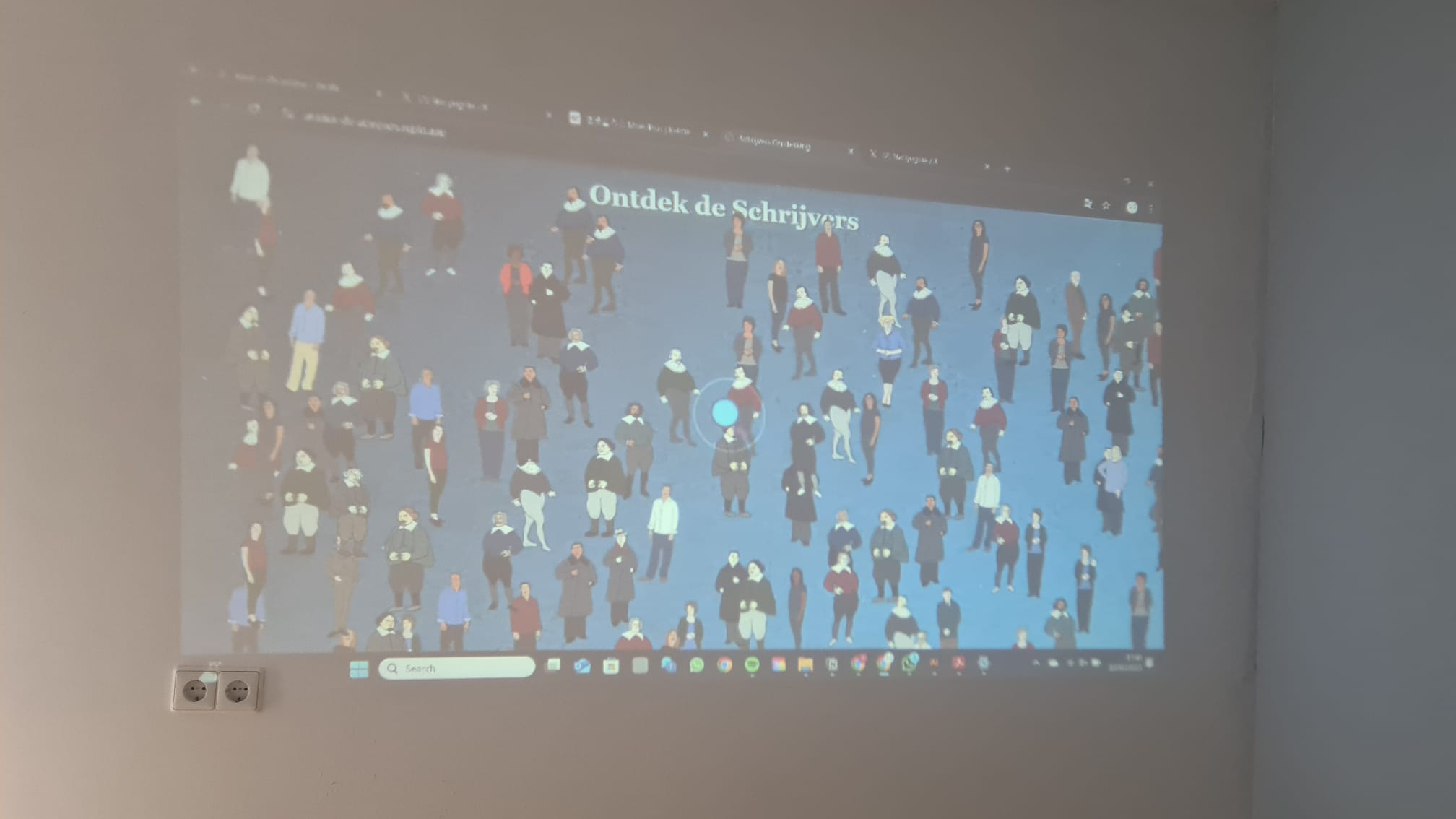
Projector Testing
These are the final embodiments of my design “Ontdek de Schrijvers” (Discover the Writers), an interactive experience in which visitors uncover the people and stories behind the national library collection of the Koninklijke Bibliotheek.
Through playful interaction and layered storytelling, the design transforms the collection from an archive of books into a living network of authors, narratives, and human perspectives, making the grandeur of the collection both accessible and personal.
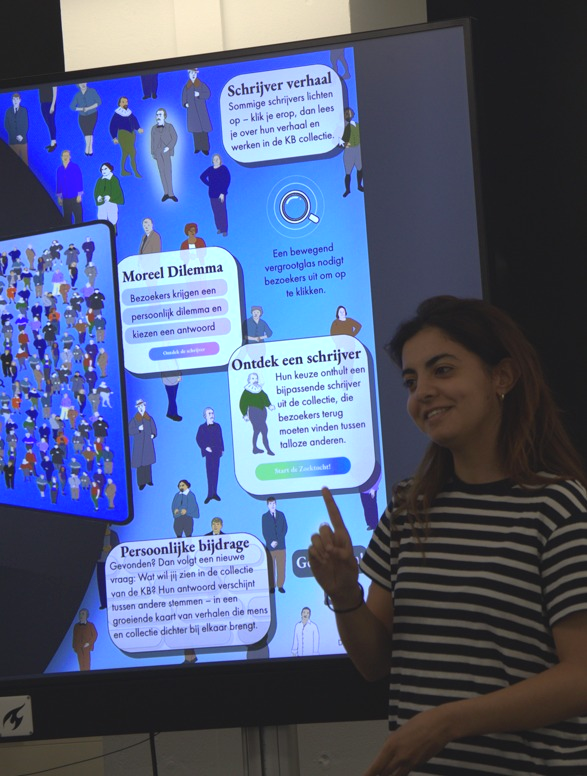
“Ontdek de Schrijvers”translates the KB’s mission into a tangible visitor experience and invites audiences to actively contribute to a living collection. The concept was positively received during the client meeting, where the KB confirmed its engagement potential.
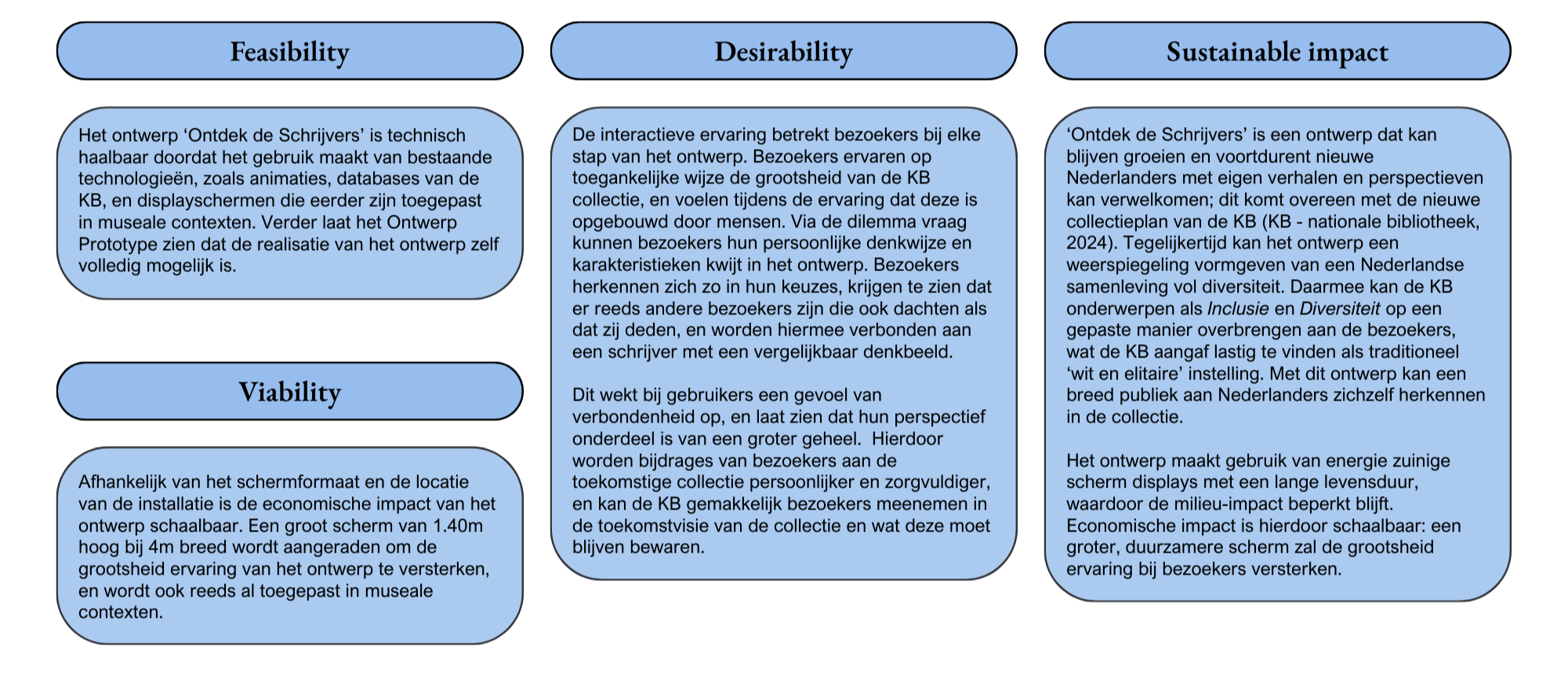
The concept demonstrates feasibility through its use of existing technologies and validated prototyping, and viability through its scalable implementation depending on context and screen size. Its interactive and personal approach enhances desirability, fostering meaningful engagement and reducing the distance between visitor and archive. At the same time, the use of durable, energy-efficient displays supports a responsible and long-term sustainable impact.